Wednesday, April 20, 2016

The Jackson on the 20 ain't Jermaine


Sometimes I remember crazy stuff that's completely worthless at times, like an old Fresh Prince of Bel Air episode when Will was settling an argument with Jazz and Tyriq.

Jazz: (to Will, about Tyriq) What's he doing here?
Tyriq: (to Will, about Jazz) No, what's he doing here?
Will: Now, y'all not still mad about that watch thing.
Tyriq: He sold me a fake Rolex.
Jazz: He paid with a fake $20.
Will: [to Tyriq] Now, first of all. You should have known it was fake when you saw that the warranty was only for two hours. [to Jazz] And you should have known the Jackson on the $20 ain't Jermaine.
Jazz: They all look the same to me.


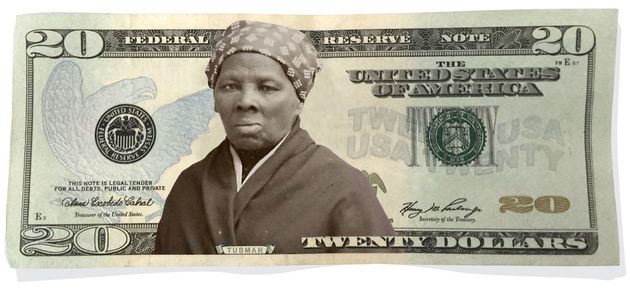
That episode was from 1992.  Fast forward to 2016, and it was just announced today that Harriet Tubman will take over the face of the $20 bill from Andrew Jackson.  On the face of this, no big deal.  Most people do not know what Andrew Jackson did, why he's on any bills, or even care.  Maybe, people don't even know that he was the 7th President of the United States.  Either way, this post really isn't about Tubman, or the $20 bill now or in the future.  It's about the fight behind this announcement.  The symbolic and ideological fight that was the replacement of Hamilton on the face of the $10 bill or Jackson on the face of the $20 bill.

Symbolically, Hamilton and Jackson were at polar opposites of banking and even the political spectrum, not unlike the Republicans and Democrats seem to be today.  However, back in the early years of our country, the party system was a little different, so some history on the men and their parties.

Andrew Jackson helped solidify and create unity for what became the current Democratic party, and the main opposition party to the Whigs (which eventually disbanded and turned into the Republican Party).  The Democratic Party of that day however had some distinct differences compared to today's Democratic Party.  Back then, Jackson was morally opposed to a large central government, national banks and banking and fought for individual liberty, freedom, the Agrarian Society, Manifest Destiny, and was a devout supporter of the Republican government system created during the Revolutionary War.  He followed Thomas Jefferson in much of his ideology.  The people who formed the Democratic Party of that day supported these positions with Jackson, and was even opposed to educational reform for a public school system as they restricted individual liberty of parental responsibility and undermined freedom of religion by replacing church schools.  (Which in comparison to today would be a laughable scenario to see a Democrat who was opposed to a Public Educational School System and a large central government that couldn't dictate laws to the states).   

Alexander Hamilton was one of the Founding Fathers of the United States, the founder of the Federalist Party, and the founder of the National Banking System.  The Federalist Party was founded around businessmen and bankers who supported Hamilton on his fiscal and banking policies.  The party wanted a strong central and nationalistic government, that was fiscally sound, who had friendly relationships with Great Britain, opposed the French Revolution, and supported "Implied Powers" (from which the Federal Government was given the right and power to tax and spend money for the "General Welfare" of the United States). The main opposition party was the Democratic-Republicans led by Thomas Jefferson who denounced these policies, especially the National Banking System, "Implied Powers" and a friendly relationship w/ Great Britain through the Jay Treaty.

The Democratic-Republican party broke up by 1824 and you can see partially how Andrew Jackson helped create the support around the Democratic Party from the shared ideologies of Thomas Jefferson's party.  Meanwhile, the National Republicans/Whigs formed around the ideologies of the Federalists, Hamilton, banking and business interests.

My....how things have changed in 200 years.  While you will occasionally see the Bernie Sanders' of the world lamenting about big business, big banks, and the like on the Democratic side, or the Ron or Rand Paul's doing the same on the Republican side, the majority of politicians are in line with the Federalists, Hamilton and big banking/business interests.  The fighters for individual liberties, freedoms, and limited government are even fewer and further between, although some have come out of the woodwork as the Libertarians and Tea Party Movement have gained in popularity.

So here now in 2016 we have this battle playing out again, only in the form of who would be replaced on the face of currency bill.  I haven't read anything on the reasoning being espoused by the mainstream media, but just knowing a little history and doing minimal research to paint the picture that could be more thoroughly detailed on your own, this is what I see this as.... 

An IDEOLOGICAL battle....

In the one corner, you have Alexander Hamilton on the $10 bill.  The man who created the National Banking System, and near personally formed the ideological and physical ties that bound big business, with banking, with the power of a large government.  Who collectively could tax and spend money at will for all of the "general welfare" of the United States' interests, and pay that money to those same banking and business interests that support it.

vs.

The opposition corner with Andrew Jackson on the $20 bill.  The man who fought and actually ended the National Banking System and brought the US out of debt the only time in the history of the country, fought for limited government, fought against the politically powerful elite and monied business interests that he thought could (and would if looking at today) eventually destroy the Republican government, and fought for the ordinary citizen, the farmer, the urban worker and the immigrant who had no clout or means to fight against the political and monied elite except through the government.

I think we've all seen how this battle plays out throughout all of history.  It is no wonder this has played out symbolically again.  

So whatever you read or hear on radio, television, news sources, etc about the reasoning of why Hamilton was chosen over Jackson...remember some of the history of each man and what these two people really fought for in their lifetimes, as well as who benefited directly from their efforts. 

Sunday, August 30, 2015

Decisions, Decisions, Decisions?

It's been a little over 3 years since a post has been made.  Rainbows and unicorns and good times have transpired.  Solid "growth" and "recovery" have been made in that time with little to worry about.  Until last week.

For starters, this was the 2nd to last post made here. 
http://playwithmonopolymoney.blogspot.com/2012/05/here-we-are.html

It was decision time then and the market took off for one of the greatest runs we've seen in market history.  New strategies that have been successful for the past 3 years were to buy the high, sell higher (this is a legitimate momentum/trend following strategy), and buying the dip (for just about every investor or trader.) 

So what do things look like after last week when the market had a flash crash and huge volatility?  Let's first take a look at a weekly chart of the Dow futures.


As you can see above, the bullish trend lines of the past 4+ years were broken. The trend line will need to be retaken, and it very well could be, for the trend to resume.  The area to watch has the circle half green/half red.  If closes do not get above and hold those former trend lines, then a new trend is in the works.  It could be sideways, it could be down.  Nobody really knows the future.  But it's definitely interesting and important to watch and see.  This picture looks pessimistic for the long run with the weekly chart.  However, the trend line could be followed up, make new all time highs and never regain the upper side of the bottom broken line.  That could mean some unforeseen, quick drops in the future.  Those could also happen in the present, but I think there's enough emotional draw that this is just a minor correction in the market to keep buying the dip.  We should know more once the Federal Reserve has decided on officially raising interest rates in September or not.

There's also a look at the monthly picture.  See below.

This picture makes it look like nothing has changed even longer term.  A correction took place and bounced off of major support of a regular bull market that goes back to 2003-2008 run.  You can clearly see the financial crisis in 2008 when those trends broke, and it took over 3 years to return over the original trend, but it did. 

There's one caveat that I see though, and that's the unfilled circle.  The low of the past couple weeks broke through both of the long term monthly trend lines of the past 5+ years.  The close of the market tomorrow (8/31/15) will determine if the close for the month stays above the main monthly trend lines for the past 5 years.  But looking at the weekly, and at the monthly, the first crack in this amazing run has been made.  Staying near the filled green is key.  Falling to the filled red would be really dangerous. 

What to do about it is the question though...if anything.

Tuesday, July 10, 2012

MF Global 2.0 - PFGBest and Europe Banking Glitches

There is the next futures/commodity theft occuring now.

http://articles.chicagotribune.com/2012-07-09/business/chi-broker-pfgbest-freezes-funds-after-founders-suicide-attempt-20120709_1_suicide-attempt-suicide-note-mf-global

http://www.suntimes.com/business/13689539-420/pfgbest-accounts-held-after-founders-suicide-attempt-report.html

http://blogs.wsj.com/marketbeat/2012/07/10/pfgbest-scandal-another-black-eye-for-futures-industry/

http://www.zerohedge.com/news/pfgbest-now-mf-global-part-2-220-million-segregated-client-money-has-just-vaporized

$220 Million of customer money just doesn't seem to be there.  Huh?  Just like MF Global...only this time PFGBest (Peregrine Financial Group).

For reminders, Ann Barnhardt closed her entire financial firm over MF Global. http://www.theblaze.com/stories/going-galt-hedge-broker-shuts-down-firm-with-chilling-letter-about-the-market/ 

Her rant today (July 9th) is pretty telling. 
http://barnhardt.biz/

And Zero Hedge did start looking into who could be next.
http://www.zerohedge.com/news/first-mfglobal-now-pfg-who-next

Could this be just a futures problem in the industry, or a systemic problem in the banking/financial world?


My bet is on banking/financial world systemic problem.  Too many issues over too much ground across the world.

Not sure if any U.S. coverage is on the "IT Banking Glitch" over in Europe, but there's some other issues going on in the financial world. 

Ulster Bank, Ireland - 600,000 bank accounts - little to no access - no funds going in on direct deposits - funds still coming out.  An IT glich seems improbable for the length of time.

NatWest, England - 12,000,000 customers - same
http://uk.finance.yahoo.com/news/natwest-technical-problems-continue-hamper-081014918.html

June 24th - Bank Glitch needs a week to get fixed.
http://www.bbc.co.uk/news/uk-northern-ireland-18569815

June 30th - Won't be fixed by July 2nd
http://www.bbc.co.uk/news/uk-northern-ireland-18657127

July 9th - Finally catching up
http://www.irishtimes.com/newspaper/breaking/2012/0709/breaking35.html

And for comic relief for 600,000 accounts having limited / no access to funds...
Credit Rating - NOT AFFECTED - what a joke.
http://www.rte.ie/news/2012/0627/ulster-bank-accounts-back-to-normal-by-next-week.html

RBS is blaming Offshoring - yeah ok
http://articles.economictimes.indiatimes.com/2012-06-28/news/32457355_1_anti-outsourcing-offshore-outsourcing-outsourcing-issue

RBS is blaming duplicate mortgage payments on glitch...this is theft, plain and simple.
http://uk.news.yahoo.com/rbs-blames-glitch-mortgage-payments-being-taken-twice-120922678--finance.html


This is the joke of a financial system we have in the world today and something is very, very wrong.  Get prepared for when these "random" occurances happen to the U.S. banking system. 
I'd call them bank holidays and theft.  I guess they are calling them "IT Glitches" and "Accounting errors" these days.

Saturday, May 19, 2012

Here we are....

So one of the last charts I posted was this one right here...going all the way back to January 26th.


Since then, it's been mostly sunshine and rainbows.  Except that all of the things discussed back in November through January still held true.  The only thing that really changed was the news out there.  Instead of being doom and gloom, the news really was sunshine and rainbows.  Why?  The gov'ts were able to do a kick save, then just put out all great information like decreasing unemployment, as the markets went up and up and up.  The news was mixed out of Europe.  There was a little issues with Greece possibly not making a payment on their new debt and defaulting, which technically they did and triggered a bunch of credit default swaps, but it was once thought the triggering of CDS' would cascade into a full collapse of all the banks in Europe and start a brand new 2008 style crisis all over again.  It didn't happen.  Probably because of the kick save and the liquidity swap rate being reduced, among other help along the way that isn't really important to discuss.  But, here we are.

You really can't write a better script than this.  America going into the abyss (in Nov).  The gov't comes in saves Europe and the US with a magic reduction in liquidity swap rates.  That goes to the peak and things breakdown.  Then they magically print (or trade) money out of thin air to "boost" the economy past the peak.  It last all of 5 months and we're heading back down.  What will our super hero do now that their save is in danger again?  It looks like we will find out. 

The blogosphere/banks/whoever have all been projecting QE3 (Quantitative Easing) to happen in June/July.  Partly because of the elections coming up, partly because the banks thought they would need the money again by June and mostly because that's when their next meetings are.  But before any QE saves can come through, the FED would need a reason to do more QE, so they (the banks) need another crisis situation.  It's happening.  Anybody see this one?
http://www.washingtonpost.com/business/jpmorgan-ceo-dimon-acknowledges-800-million-in-recent-losses-on-investments/2012/05/10/gIQAhyaPGU_story.html 

So like my title says again, Here we are.  Are we going to be going into "crisis" mode again because it's convenient and the banks now need more money?  It sure looks like it from the charts, and the news coming out lately.  I may go into the JP Morgan trading loss in another post as well as other things, but for now...

The stage is set!  The actors are ready play their parts! And around the corner is the greatest of shows... The Election!

Right now, at critical support.
 As you can see above, the "boost" didn't get us through any of the 2008 highs.  I didn't expect it to.  That tells me there really is no real recovery.  I've been saying that for a long time though.  What's interesting right now is that we sit on that critical support (former resistance) at the 12,300 level in the Dow Futures.  That is right where the "boost" pushed us through to give everybody the 20% gains for the 1st quarter of 2012 which have all been erased now in a matter of weeks.  (This is a fun ride huh?)

So a break down through this support level would signal to me a continuation of the previous trend (which is down).  That should last until all of the gains from the first "boost" back in November have been erased and we sit somewhere around 11,000 on the Dow Futures.  That's just a guess, but who am I, just a nobody with a faint idea of what I'm doing here.

One thing is for certain though...be prepared for anything.  The reason everybody hangs on Ben Bernanke's every word is because his word is the only real game in town any more.  (Next meeting June 19-20)  Whether the FED prints money or doesn't print money.  THIS IS THE NEW WORLD WE LIVE IN.  A world controlled exclusively not by free markets or entrepreneurial spirit, but by manipulated data, manipulated perceptions and manipulated markets.  You better get used to that starting right here, and right now.

Tuesday, April 10, 2012

Student Loan Bubble

It looks like the next great bubble is about to collapse.  In 2008 it was the Housing Market bubble. 

Take a look at this article which references the article below that.  This is what I would refer to as the equivalent of a Reverse Mortgage.  The Reverse Mortgage was popular for a couple years before the housing bubble burst, and maybe still used today, whereby you would sell your equity in the house for a loan of money right here and now to extinquish all debt.  Then when you sold the house, you would have to pay off the reverse mortgage loan (the upfront equity payment) first, and then get whatever money was left over.

Same idea here, only it's no longer the equity of the house, it's the future equity of a slave (I mean, college student). 

http://www.zerohedge.com/news/modest-proposal-students-refuse-become-debt-slaves-opt-sell-equity-their-future-wealth-instead

http://www.economist.com/blogs/freeexchange/2012/04/education?fsrc=scn/tw/te/bl/sellingapieceofyourfuture

My guess, we have 2-3 years before the student loan bubble pops and the $1+ Trillion in student loans needs to be bailed out so it doesn't "collapse" the entire higher education system (i.e. the gov't education system).

Thursday, March 1, 2012

S&P 500 (Updated)

A real quick chart here.  Just wanted to pull something from an article and show you how this could play out.
http://www.oftwominds.com/blogmar12/SPX-Nikkei2-12.html

There's 3 scenarios that I see here labeled.  Most likely would be #2 in my opinion, but #1 and #3 can't be ruled out as infinite money printing ("liquidity") could be provided to force the markets higher, or a complete lack of liquidity could tank the markets.


Scenario #1 would be a breakthrough to the upside in the next couple weeks or so.  This seems unlikely as Greece needs to make a payment March 20th for their bonds and they don't have the money...at least that I know of.  The ECB made a pretty incredible "loan" yesterday to it's member banks to either help keep the market going higher, or as support in case Greece defaults (not likely) or the bond holders take a large hit from a haircut on the bonds (most likely).

Scenario #2 seems more likely as at least until it hits the major downsloping line of the past 10 years.  Then higher or lower.  My bet would be on higher at that point.  The markets are manipulated right now, and I don't see that changing any time soon.

Scenario #3 seems the most unlikely due to the fact that it could have already happened in November and the central banks intervened to make sure it didn't.  I don't know why they would stop now, but this scenario could happen if Greece officially defaults (based on the ISDA's determination...very unlikely) and the central banks decide to not intervene.  In that case, 2008 all over again.

So there you have it...my take on the next things to happen in the marketplace is #2...a drop of about 15-20% to erase the gains of 2012, then a steady climb back up to resistance.  What happens after that depends on what time of the year it is I think.

UPDATE - 10:30PM:

Just when you think things can't get any more bizarre...


So the Bank of Israel decides that keeping money in bonds and other currencies is not the best option.  It needs to get better returns (and more risk).  Let's prop up the US stock market.

Obviously this will have an effect on the prices above...maybe scenario #1 isn't so unlikely any more.

I also need to point out the fact that a central bank is now out in the open about investing in things other than traditional items like currencies, bonds and gold...we're now up to companies outright and stocks.  

Bye, bye free market!  It was nice knowing you.

Friday, February 24, 2012

Gas Prices

Before everybody starts believing all of the non-sense out there about why gas prices are so high, I thought I should put a post that even the most basic person can understand...

You'll see articles out there like these...

Refinery Closures...
http://finance.yahoo.com/news/angry-about-high-gas-prices--blame-shuttered-oil-refineries.html

Wall Street and Speculators
http://thehill.com/blogs/e2-wire/e2-wire/212137-pelosi-blames-wall-street-for-gas-price-spike

Middle East
http://www.wpxi.com/news/news/local/gas-prices-are-about-go-even-higher/nKPsJ/

Maybe all have some value if you want to look at things from any one of those angles...but really, that doesn't explain what I'm about to show you...

Here is the value of the Dollar.  Actually the Dollar vs. a basket of other currencies, but 58% the Euro...

In 2012, it's been down.  Around a 45 degree angle down.
So that means that the dollar is losing it's value, or it's being weaken, or inflated, or debased.  Whatever you want to call it vs other currencies.  As more money is created and the dollar gets weaker, it causes inflation.  Generally in everything.  Keep in mind, it was November 30th that the G6 coordinated an open swap line to prevent a continuation of that ugly chart I drew back in November.  Since then, near unlimited liquidity (money printing) around the world...

Now Gasoline...for March delivery.

Almost the complete opposite of the dollar...Dollar down due to inflation, Gas up.

So let's make sure this holds true for other things...


Yup...

But it's a world-wide liquidity injection...so we should see it in foreign items too...

US $ and Japanese Yen down....all others up.

Stock markets across the world.  All up, just like the Dow and S&P.  Some even more so, some less so, but all up.

Ok...Any Questions?

So when you read about Gas prices going up and you hear this or that...they're just stories, made up by someone who probably doesn't know anything trying to sell a story.  The real reason is the Global Bailout by the US dollar and the Japanese Yen it looks like.

Does Iran have a part to play in the future gas prices going up, absolutely.  Tensions about a war in Iran will do that to the global oil price, which as you see has gone up dramatically in the past week or so.  That will get us on our way to $5 gas this summer.  Fun times.

So don't look any where else but the Central Banks who nicely kept us from another recession in November and instead gave us high inflation, which as you can see, includes the price of gas, with everything else.


Wednesday, February 8, 2012

Fraud and Ridiculousness


I'm pissed, and so should you.

This is proof positive we no longer live in a state of fairness when it comes to the financial/government complex that has formed.

So how much does it cost to defraud thousands and thousands of people out of money through sub prime lending generating billions in revenue, millions in bonuses, and more importantly a financial crisis that saw trillions disappear into thin air, an economic collapse and loss of jobs world-wide, the triggering of massive taxpayer funded bailouts in the billions of those same companies that perpetrated the fraud?  Not to mention the  world economy constantly being at the edge of the cliff without massive NEW inflationary money which steals your purchasing power?

$25 Billion...

Does anybody care?  Nope...Giants won the Super Bowl. New York, the epicenter of this fraud is happy, so the rest of the world should be to.

Read it, understand it...
http://www.zerohedge.com/news/us-settle-fraudclosure-25-billion-even-it-channels-fake-tough-guy-meaningless-lawsuit-against-v

For those with WSJ subscriptions...

http://online.wsj.com/article/SB10001424052970203315804577211620066795962.html?mod=WSJ_hp_LEFTTopStories

http://online.wsj.com/article/SB10001424052970203315804577211470167644182.html?mod=WSJ_hp_LEFTTopStories

So in case you want a quick summary...

Banks, Lenders, Fannie Mae, Freddie Mac take cheap interest rates and gov't subsidies to loan unqualified people massive amounts of money to purchase inflated priced homes through sometimes (but not always) shady practices (i.e. teaser rate loans, interest only loans, no money down loans, etc.).

These same lenders then take all of their loans (that they made nice income on at $2k+ for each loan/refinance) and pool them together to sell them immediately as securities.  Buyers then use similar banks/investment houses as mediums to sell these pooled securities to investors (with broker fees).  The securities that they can't sell, are packaged into new securities with new names (all AAA rated...equal to Gov't Bonds).  Extra securities/hedges are also created to fuel even more loans and re-insurance of loans to fuel even lower interest rates and more income on the same loans.

Meanwhile...the original loan is actually sold to each place/pool of security, and in some instances, an extra loan is created out of thin air to mimic the original loan through derivatives.  Since there is little tracking and no paperwork really done to officially transfer the loan along the way (and definitely not when a new one is created through derivatives), there is really no way for a bank or whoever to officially foreclose on the mortgage and take the house when the unqualified lenders stop paying because the paperwork was never done.

Here enters the robo-signing, where outsourced companies were paid to do the paperwork, but in actuality just paid people to fraudulently sign for the lenders/banks, etc.

http://www.cbsnews.com/stories/2011/04/01/60minutes/main20049646.shtml

This allows the banks/lenders to foreclose on homes, take people out of their houses and sell them to re-coup the money lost through the loan (if possible) without having the legal documents to support it.

Home owners can allow it to continue, or fight it and go to court.  If they sue and go to court who knows, but my guess is they could get a lot more personally.  Most states Attorney General's are filling claims against the lenders already in class action lawsuits, but they will settle as well.

What are they settling for again...$25 Billion.  And not all of it goes to the people it harmed the most.


"The planned pact would involve around $5 billion in cash penalties, payable to borrowers, states and the federal government. That includes $1.5 billion in cash payments to borrowers who went through foreclosure between September 2008 and December 2011. Borrowers could receive $1,500 to $2,000 each, with the actual amount paid depending on the number of borrowers filing a claim.

The agreement is expected to call on the banks to provide $20 billion in other aid—by cutting loan balances for tens of thousands of homeowners and by refinancing thousands of borrowers who are current on their loans but owe more than their homes are worth.

Officials say the deal will help provide immediate benefits to around one million homeowners, while raising accountability for banks that work with borrowers facing foreclosure. The foreclosure process has been snarled since late 2010, after allegations that banks had serially submitted bogus mortgage documents when attempting to repossess homes from delinquent borrowers."

As the Zero Hedge article points out...why now?

"The bank payments would unlock a large new source of housing funding at a time when Congress doesn't appear likely to approve new spending measures to tackle lingering problems facing housing markets, such as a refinance program that President Obama unveiled last week."


That means...they need housing prices to rise to make the economy "look" good.  Not that it actually is mind you.

Forget that people shouldn't have borrowed more than their income level.  This fraud has nothing to do with that.  This has to do with money, fraud and just lawsuits getting swept clean for pennies on the dollar to the same banks and lenders that perpetrated the fraud in order to boost their stock prices, and make the economy look nice and rosy.  Who gets screwed?  We do...again.

Other articles of interest and info.


Thursday, January 26, 2012

ZIRP


Let's begin with a look at the Dow Futures, which I like to do as the Dow is the market that everybody looks at to get a guide to the economy no matter where you are in the world.

As you can see, and as I noted a couple weeks ago, the Dow broke through that first main resistance level around 12,200 or so.  Since then, it has continued to go up, but in a tight trading range.  Also, there's the development of an ascending wedge pattern that began in November which is a bearish indicator.  If you remember, it was the end of November when I thought the market would continue to drop into the abyss.  Lo and behold, the Fed announced their reduction in interest on Credit Swaps with Europe that started this wedge pattern.  Again, this is bearish and it looked as if the chart was going to break down soon.  Like it started to do yesterday and this morning.  Lo and behold, the Fed announced it will extend the low interest rate policy (ZIRP - Zero Interest Rate Policy) now through 2014.  Before it was through mid 2013.  So that's where we stand.  As you can see, it's getting pretty close to the highest Dow price in the last year.  If you go back and look at a weekly chart back to 2007 (before the financial crises started) you'll see that the top of the current trend goes all the way back to early 2007's top.  This, in my opinion, was the first time when people were starting to figure out the problems in the financial system and began to sell.  Then there was the last rally with a head and shoulders top, a breakdown, an island rally, then all hell broke loose in the economy and the financial system.


I would like to point out the lack of volume in the commitment of traders (COT) numbers below the chart. Clearly, the futures market has not been trading very often in the Dow. In fact, the entire move from 2009 to 2011 was without many traders in the futures market. Maybe there's an issue, or maybe it's because you can't accurately predict this market as it's not a fair and free market any more?
http://en.wikipedia.org/wiki/Commitments_of_Traders


Now that we got that out of the way...let's go back and discuss ZIRP.

Originally, Ben Bernanke set up his ZIRP back in December 2008 after the financial crisis started and reduced the Discount Rate to 0-0.25% in order to jump start the economy (like priming an engine).  This set rate has continued for 3 years straight and was expected to expire multiple times, the latest in mid-2013. http://online.barrons.com/article/SB122945676231311277.html

Well, the Fed decided that ZIRP should continue through the end of 2014 today, or another year and a half past the updated mid-2013.  To say that ZIRP will end at any point is probably just folly.

So what is ZIRP and what does it aim to do?  Well, it's a highly inflationary policy to have.  The idea is that you make loans cheaper and attractive, with 0% borrowing from the Federal Reserve, that money will just pour into the economy, creating inflation on purpose to offset the deflation that the economy would normally experience during a correction/contraction of money supply and recession/depression.

That is to say, if there was a major bubble (like the housing bubble), and it popped and was ready to correct to sustainable levels, instead of allowing the bubble to re-adjust to reflect current and accurate prices, you would loan out money for free to keep the prices from falling (i.e. replace deflation with inflation, and hope that the two offset each other or inflation was greater than the deflation).

Here is a link, and I encourage you all to do this if you haven't already...Start the Fed's game and immediately change the Fed Funds rate to 0%.  Then run that for 12 quarters, or the 3 years ZIRP has already been in place.  You should see a 1.5% unemployment rate and a 15.91% inflation rate.  From the beginning of the game, that's a change of -3.25% in the unemployment rate, and an increase of 13.77% inflation in 3 years.
http://www.frbsf.org/education/activities/chairman/

Let's test those numbers...with John Williams' Shadow Stats which shows the different gov't data variants.

Unemployment...


Unemployment was 7.3% "officially" in December 2008.  It is currently 8.5% "officially."

I'm not seeing the unemployment data decreasing as expected through this ZIRP policy by the -3.25% especially if you look at the SGS Alternate unemployment which is calculated based on the pre-1994 model of calculation, which included discouraged workers.  That number has actually been rising the past 3 years instead of falling like the "official" BLS (Bureau of Labor Statistics) reports.

Inflation...


Inflation however has been increasing since ZIRP was started.  Maybe not to 15.91%, but there's been a definite increase from 0% to 4% "officially."  I think the inflation number may be closer to the 12% or maybe higher that the SGS (1980 based) calculation indicates.  I say possibly more, because if you look at the price of oil or gold, historically stable in price vs. each other, you'll see they have both risen by more than 10-12% vs. the dollar in the past few years.

So if the goal is to keep prices from falling...job well done!!  Inflation has not only stopped deflation and falling prices, but has done enough to swing it upward almost back to pre-crash levels of 2007.  Who can forget paying $4.25/gallon for gasoline in the summer of 2007.  Can't we please go back to those days?  Well, we're already there, just 6 months early...$3.30/gallon for gas in the winter of 2012 is the highest it's ever been...and that's on seriously lowered demand...makes sense right?  Well, you can thank ZIRP and it's inflation.

There's another thing that I would like you to try on that game.  Do 0% for 2 years (or 1 year less than the current ZIRP).  Then raise it to the highest Fed Funds rate of 19% and do that for the remaining quarters (2 years).  Interesting huh?  That's basically what the Federal Reserve did back in the late 1970's to stop the insanely high inflation, shortages from price caps, and return the country to a more sound economic footing for growth.

THIS CAN NOT BE DONE IN OUR CURRENT ENVIRONMENT.  It would be political, economic and civilization suicide.  The government would default and go bankrupt within a year as interest payments would outpace tax revenue, even if it was increased 3 fold.  15 Trillion x 19% is $2.85 Trillion in interest PER YEAR.  Total tax revenue right now is only around $2.5 Trillion.  That would mean $0 for any program, politician, employee, or building INCLUDING no IRS to even collect the money owed the gov't.  This being in today's dollars.  That world is a world without a United States in it.  It's impossible for anyone to allow that to happen, so raising interest rates to stop the onslaught of inflation is OUT.

So what does ZIRP look like over time beside being inflationary...

Luckily we have a country that has done this and continues to do this...Japan.

Keep in mind, this is a 10 year bond.  Somehow, people (not smart ones) are willing to receive 1% over 10 years to lend to the Japanese government.  Again, I'm sure people aren't willing to lend at those rates (at least I hope), but the Japanese Central bank and interbank lending sure are.  Free money, and free profits from the spread.


http://www.zerohedge.com/news/%C2%A51086000000000000-quadrillion-debt-and-rising-and-whythe-%C2%A5-will-soon-be-lost-decade-or-two

I encourage you to read about the Lost Decade in Japan.  The summary of ideas by Richard Koo is probably accurate and what took place.  That is exactly what is taking place right now in this country.  Extremely low rates are causing people, businesses and banks to deleverage their balance sheet.
http://en.wikipedia.org/wiki/Lost_Decade_(Japan)

Here is Obama after taking office warning that the U.S. could end up in a Lost Decade just like Japan.
http://online.wsj.com/article/SB123419281562063867.html?mod=djemalertNEWS

To say that there was a lost decade in Japan and that the U.S. is now in a similar situation is popping up everywhere recently with the announcement of ZIRP through 2014.

http://www.tlnt.com/2012/01/26/following-in-japans-footsteps-how-a-lost-decade-could-impact-employers/
http://www.forexnews.com/2012/01/market-outlook-for-january-26-2012/
http://avidinvestorgroup.com/2012/01/welcome-to-japan/

This is a very good paper written in December (before this announcement obviously) on the similarities of the Federal Reserves policies with the policies of Japan in the lost decade and the deleveraging that it caused.
http://www.cirje.e.u-tokyo.ac.jp/research/dp/2011/2011cf828.pdf

Here's another good paper...
http://www.imes.boj.or.jp/research/papers/english/09-E-25.pdf

All of this may look and sound similar.  Yes the US is embarking upon the same policies that Japan has done.  NO, the results will not be the same.  There is one simple reason for that...Japan's economy, although originally had a housing boom and collapse the same as in the US in the late 1980's, the Bank of Japan DID NOT immediately intervene to the same extent.  The bust was actually caused by monetary contraction, that leveled out and allowed growth and strength in the country to build for a long period of time.  This was also around the time where Japan became a manufacturing giant in the world economy.  Contrast that with the US, where the same things happened, but this is at a time when the US is losing more manufacturing and investment into the country than ever before.

The paper below called, "The Myth of Japan's Lost Decades" by Kel Kelly clearly explains that things are not what they seem on the surface.  While Japan had a "Lost Decade" or two, due to very low GDP growth, the actuality is the country had a strong currency and economy that other countries wanted to invest in, which they did.  The Bank of Japan's inflationary policies just offset the inflow of massive investment into the country and purchase of their manufacturing and goods.  If they did not do that, they would have never been able to sustain their growth as their products would have been too expensive to import.  This is similar in my mind to China today.  Everything is made in China just about these days, and in order for China to make sure their products stay cheap for the rest of the world's consumption, they need to peg their currency to the other countries in order to keep products cheap to their buyers.  If not, they will turn away and produce the items themselves.

http://mises.org/daily/5170

So where does that leave the US?  Well, since we don't have the strength in currency and the manufacturing and investment to support sustained ZIRP and quantitative easing like Japan, these policies will be inflationary indeed.  And instead of the average person looking around and seeing great growth even though the official numbers look bad as described in Kelly's paper...the US will have numbers that look ok, but underneath the surface will be the complete decimation of the average person's wealth and standard of living through inflation.  Meanwhile, the ZIRP will allow all the failed banks to deleverage and exit their positions, as well as allow the Federal Reserve to exit their previous purchases of toxic, worthless assets on unsuspecting people, making the situation even worse for the average person.

In case you haven't figured it out yet...the government is definitely not on our side.

Saturday, January 7, 2012

Italy, Cash and the People

In this previous post (Europe and Today) on Nov. 17th, I commented about the Greece and Italian leaders being replaced.  The people replacing them are being called "technocrats" or technical experts in a managerial or administrative position.  Generally, a technocrat is someone who wants the government to be run by academics, scientists, engineers or technology experts vs. politicians, businessmen or economists.
http://en.wikipedia.org/wiki/Technocracy

In this case, Greece is being led now by Lucas Papademos, and Italy by Mario Monti as Prime Ministers.  Not really technocrats as they were both economists and businessmen, but that's what they are calling them because they were academics.
http://en.wikipedia.org/wiki/Mario_Monti
http://en.wikipedia.org/wiki/Papademos

http://www.nytimes.com/2011/11/11/world/europe/greece-and-italy-ask-technocrats-to-find-solution.html?pagewanted=all
http://www.economist.com/node/21538698

I said this in my original post about these two and I'm highlighting three keep points...

"George Papandreou and Silvio Berlusconi were forced to resign in the past two weeks for not getting their fiscal house in order and putting the entire European Union at risk of collapse.  This will not end in my opinion until every country's head of state has been considered "friendly" in helping the EU and the European Central Bank do whatever it is they are trying to do.

The replacement of Berlusconi with Mario Monti is just what I am talking about here.  A politician being replaced by a banker.  The problem with this is that Monti will force the fiscal house to get in order.  What's wrong with that, sounds like that's what they need, right?  Sure, if they want more taxpayer funded bailouts of banks, increased retirement ages, lower social programs, etc.  Banks who should be bankrupt already.  Banks who pay their CEO's millions of dollars (or Euros) to run an already failing business into the ground with more taxpayer funded "loans."  This is what is constituting an "answer" to the problem.  This is no solution, only more problems."

So the first highlight I said that Monti would help the European Union and the European Central Bank do whatever it is they are trying to do.  Well, it should be obvious that the European Union wants to have the Euro currency survive, and the European Central Bank wants what's best for their interests, for the banks to make money and survive.  So at stake is the strength of the Euro and the banks.  The same banks who should be bankrupt already, as my second highlight reflects.  And in order for the Euro currency to survive, both the countries who are causing the "fiscal issues" (i.e. Greece and Italy, right now) need to get their house in order, and the banks need to stay afloat.  So their solution was to put Mario Monti in as PM and help do this.  I said it was no solution, only more problems.

Well, it didn't take long for Monti to get to work.  
“What we need,” Monti told reporters on Dec. 5, “is a revolution in Italians’ thinking.”

1.) Cash caps.

On Dec. 4th, Monti instituted a 1,000 Euros (about $1,340) cash cap on all transactions.  So no more going to the store to pay cash for a nice new tv, used car, item at a pawn shop, etc.  All illegal now.  Everything must be done by check, debit card, or credit card.  

Why?  So it's traceable.  You can't collect taxes on cash transactions.  Heck, most governments consider it illegal, nefarious, terrorist behavior to use cash these days.  Well, Italy, who is a very cash oriented country just eliminated larger cash transactions.  Monti's goal...300 Euros as a cap.  Why didn't he do that right away, uprising. He knew people would have a big issue with 300 Euros, so it'll be in steps so people will have "time to adapt to new rules."

Problems with this?

Oh yeah, there's problems.

One issue I immediately see is the near forced use of debit and credit cards.  Sure you can write a check, but who does that any more when you can swipe a card so easily?  So why is debit and credit card use a problem.  Well, the banks charge money for their use.  Debit cards are about 1.00-1.50% of the total, and credit cards are 1.25-3.00%.  They charge the merchant or business this fee to accept them.  This increases the price of items in stores to cover that cost.  How many people have noticed that the price of Diesel for trucks on the highway are $.05-$.07 less per gallon if using cash vs. credit/debit cards?  This is why.  In the future, I would have thought the use of cash again would become the in thing to do as stores picked up on this.  Well, not if the gov't makes it illegal they won't.

There's another issue at hand, and that's the culture of America...borrow, spend, repeat.  

Italy’s tradition of saving won’t be at risk from the new measures, said Nicola Borri, an economics professor at Rome’s LUISS University. “Italians mainly use debit or credit cards with stringent limits,” he said. “Financial instruments that allow you to pile up debt are very limited in this country.”

The bold is mine.  So, Italy already has a culture of fiscal prudence.  But Monti wants, "a revolution in Italian's thinking" more directed to the borrow, spend, repeat American thinking.  We all know how that turned out.  

So as you may be able to see, throughout all of the world's leadership, they want to create more debt and create more money to pay for the financial crisis that was caused by too much debt and too much money.  

2.) Tracking People

This is an Italian article (will need to convert using Google translator) that discusses the new "demands for tighter use" of the Fiscovelox (looks like a camera surveillance van) of the Guardia di Finanza at the border of Switzerland to identify possible tax violations and "to prevent the flight of capital abroad."

No comment necessary for that. The goal is clearly said to make sure people don't leave the country with their money.

So here in one month, Italy's Mario Monti has done two things to make sure that Italians will pay the huge debt burden that has been incurred by the gov't in order to help the Euro currency, and to help the insolvent European banks make more money through the use of transaction costs of debit and credit cards.

I see a lot of problems with these two things.  This is what happens in a country that spends too much money that they don't have.  Or has a government that spends too much money that the people don't have.  Eventually, it will fall on the people of that country, and the noose will be tightened.  This is the beginning of what will eventually occur in all major debt burdened countries.  The government's will make the people pay by any means they can.  And who exactly are they paying again?  Who does the government owe money to?  If you remember my previous posts, the financiers (banks, wall street, central banks all around the world, anyone who buys their gov't treasury bonds).  These are all private institutions.  And they are owed money.  They need the government to help collect this money for them, so they put people in power like Monti and Papademos to institute laws and regulations like these to make sure the debt is paid.  If you try and leave the country, they won't let you.  All for the sake of the creditors.

Tuesday, January 3, 2012

New Day, New Year, New Market??

This is a very interesting start to the new year.  That area that the DOW had to cross in order to prevent that ugly trend was broken.  Why?  I have no idea.  I haven't seen anything in the news that tells me 2012 will be any different than 2011.  I HAVE seen reports of record Christmas gift returns.  How that helps the market improve is beyond me. 

My guess, everybody knows that QE3 or some new stock buying program is coming this year and they are front running.  That or it's an election year and Obama's numbers haven't been good, so make sure the economy looks pretty to get votes.  Again, who knows when markets are manipulated.  We'll see if this gap open holds.  If it does, I say something has definitely changed, but I haven't seen any reason to believe it's because of something real.


Saturday, December 31, 2011

MF Global - Beginning of the End?


On Halloween weekend, there was a primary dealer that went bankrupt.  It's been in the news for a while, maybe you've heard of it, maybe not.  It's MF Global, a commodity futures brokerage firm, kind of like TD Ameritrade/Scottrade/Fidelity, only for commodity futures, options and derivatives.
http://en.wikipedia.org/wiki/MF_Global

One thing I've learned from this bankruptcy is that it shows our system of everything is braking, and it may be beyond repair, but we'll see.

But let's back track a little to 2008 during the financial crisis.  Back then, if a company went bankrupt, (i.e. Bear Sterns, Lehman Brothers) the parts of the company would be sold off if possible to other competitiors, customer's money/assets were made whole and transferred to the new company, the remaining assets were divided up to the next stakeholders in line.  These companies going bankrupt damaged the financial system as I've mentioned before leading to the government (tax-payers) bailing out AIG, and a whole bunch of banks from the counter party risk they had with each other.  Most of these banks were foreign banks in Europe if you recall.  So private companies went bankrupt because they were stupid and were betting on highly leveraged collateralized debt obligations (CDO) and mortgage backed securities (MBS) based on sub-prime mortgages (rated AAA for some reason).  The private companies after getting bought out by Barclays and JP Morgan, then had to sell their unsaleable products (CDO and MBS) to the government in the form of the Federal Reserve purchasing these toxic assets (CDO and MBS) and bailing out companies.

How did the government fund this?  Through the sale of it's own bonds to raise the money needed.  They just called it "providing liquidity to the system" or some garbage like that.  (This raised the debt ceiling, and our national debt.)

So that was the first financial crisis where by private sector companies went bankrupt and the burden fell onto the government to fix the problem.  There's a lot of issues involved with the whole financial crisis in 2008, but I'll stop there.

That was then...this is now.

Think of MF Global as a smaller version of what happened in 2008 because, they were smaller, and they didn't have their hands in everything like Bear Sterns and Lehman Brothers.  They weren't investment bankers and securities brokers to that level, but they were similar in their own industry of commodity futures and options.

Now MF Global went bankrupt because they were doing similar things as Bear Sterns and Lehman Brothers by highly leveraging investments in sovereign debt of European countries, instead of CDO's and MBS's.  The thing to take away is that MF Global leveraged (40-1) the amount of their actual assets to purchase the debt of European countries.  This is similar to how a bank can leverage 9-1 (or more) the money you put into the bank to loan to other people, businesses, etc. (This is why bank runs are bad, they only have a small % of the actual assets in the bank, the rest are tied up in other things.  Again, think It's a Wonderful Life).  MF Global did this by borrowing money (very cheap right now w/ historically low rates) and then using that money to purchase government bonds.  Thereby borrowing money at a lower interest rate than the bonds were paying back in interest to create basically free money.  The loans were collateralized by the bonds.  So the only thing that needed to happen, was MF Global needed to maintain their minimum margin (down payment % in a way) to carry the loans.  They couldn't.

That's how the MF Global bankruptcy got started.  But it's after it was started that things started to go really badly...potentially for everyone.

One of the first things that came out was that MF Global had missing customer money.  First it was $633 million that was found to be missing by Interactive Brokers who tried to acquire the company on October 30, 2011 and made the deal fall through.  But now it could be $1.2 billion or more.  This money has still not been "found."

Here's a great link to the MF Global bankruptcy.
http://www.btrtrading.com/Legal/MF%20Global%20White%20Paper%20Revised%20-%2012-1-11.pdf

Well, there's been a lot of talk about this "missing money" and where it went, etc.  The consensus I've seen is that it was rehypothecated. http://en.wikipedia.org/wiki/Hypothecation  Basically, since MF Global didn't have the collateral to maintain the margins on the loans, they pledged their customer's money from the segregated accounts.  This is obviously not a good situation as if you had an account with MF Global to trade in commodities, that was your money you were trading, so you have a claim to that.  Well MF Global used that money as collateral, so JP Morgan (who loaned them the money) also had claim to a portion of the customer's money ($633 million - $1.2 billion+) when they filed bankruptcy.

This is where things start to show why our system is breaking, if not already broken.

When MF Global filed for bankruptcy Chapter 7, they were not listed under Sub Chapter IV (Commodity Broker Liquidation).  They were listed under Sub Chapter III (Stockbroker Liquidation).  When that happened, that basically put the customers way down the list of stakeholders, and put JP Morgan to the top of the list.  Why this was done, I could only guess.  The fact is, MF Global was a Commodity Broker with $5.4 billion in assets on over 50,000 accounts for commodities, vs. $100 million and 400 or so contracts for securities.  http://uscode.house.gov/download/pls/11C7.txt

But the point is, that decision has just changed our legal system, and puts into question it's viability.  This also should put questions about our financial system's viability if JP Morgan had to steal (with the help of the legal system and bankruptcy courts) $600 million to potentially over $1.2 billion of customer's money.  If they didn't do that, would JP Morgan have gone bankrupt due to leverage on their own books?  Would that have collapsed the whole financial system in a worse way than 2008?  I don't know for sure, but it's definitely unprecedented actions that have taken place during this bankruptcy.  So I would have to imagine there would have been unprecedented re-actions if things did not happen this way.

So what does all of this mean?

Some would say that nobody's money is safe...any where.  After all, it was because of this bankruptcy that Ann Barnhardt closed her commodity futures brokerage company.  She said she could no longer guarantee her customer's funds.  Maybe she's a little nutty, but she had her own company in this industry, and that's more than anyone I know has.  http://www.zerohedge.com/news/entire-system-has-been-utterly-destroyed-mf-global-collapse-presenting-first-mf-global-casualty

But what's the difference between some commodity brokerage's company with their accounts and say TD Ameritrade and a stock trading account, Fidelity and a 401k/IRA, Charles Schwab investments, Insurance annuities, or your bank account even?  Well, that's up to you to decide.  It could be that everything is different and if something happened to the company the accounts would be made whole.  Or maybe nothing is different and your money could be stolen as well at any time, and replaced with 65% of what you originally had.

The one thing I can guarantee, the problems that caused this situation are similar.  Companies, governments, banks, individuals all leveraging their assets (your home is a leveraged asset when you made your down payment of 3-20%, and you leveraged the other amount in a loan to actually purchase the house).  These are being collateralized as well, mostly by the assets backing the leveraged loans.  But more importantly, banks are also collateralizing leverage of assets with customer money (just like MF Global did)...see Bank of America.  They are currently leveraging and collateralizing the $53 Trillion of derivatives with $1 Trillion of customer bank accounts.  Luckily, those are FDIC insured, up to $250k.  But the actions are the same, and the result could potentially be the same, so be forewarned.


http://www.bloomberg.com/news/2011-10-18/bofa-said-to-split-regulators-over-moving-merrill-derivatives-to-bank-unit.html

http://www.zerohedge.com/news/bank-america-forces-depositors-backstop-its-53-trillion-derivative-book-prevent-few-clients-dep


So, is this the beginning of the end?  Who knows?  Maybe the next financial crisis like 2008 started with MF Global on Halloween.  Maybe instead of the governments bailing out the banks and putting it on your shoulders, they'll just take your money directly instead.  One way or the other, your money is being taken from you.  Whether it's through direct stealing like with MF Global, or Government inflation...all of the debt has to be paid, one way or another.  And it doesn't help when the national debt just keeps getting larger.  It's already clear that companies will steal your money.  And at some point, inflation won't be an option for governments to increase and pay their debts.  So the question is, then what?


A couple other good articles to read from which I have gained knowledge about this bankruptcy and have included in the above...
http://gonzalolira.blogspot.com/2011/12/run-on-global-banking-systemhow-close.html

http://www.washingtonpost.com/the-systemic-risk-revealed-by-mf-globals-collapse/2011/12/14/gIQAtrTI1O_story.html